
Florida’s healthcare boom has a hidden bottleneck.
Our state’s healthcare market is expanding faster than almost anywhere else in the country. The proof is everywhere:
- New hospitals are breaking ground from Palm Beach Gardens to Wesley Chapel.
- Ambulatory surgery centers are rapidly multiplying across the I-4 corridor and throughout South Florida.
- Dermatology groups, med spas, infusion centers, and specialty pharmacies are opening at an unprecedented pace.
Everyone knows Florida’s population isn’t slowing down, and the demand for care is skyrocketing right alongside it.
But there is a major problem: the supply chain meant to support this explosive growth has entirely failed to keep pace.
For Florida’s medical facilities, the widening gap between surging patient demand and an unreliable product supply has shifted from a mere inconvenience to a severe operational crisis.
Florida Felt the IV Fluid Crisis First
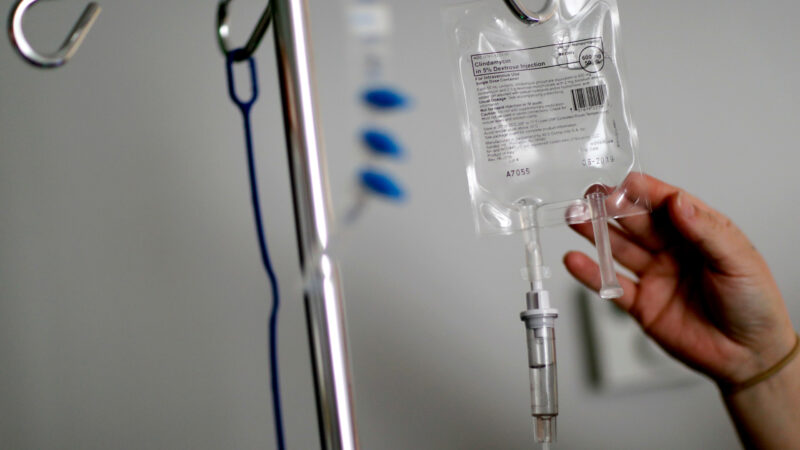
When Hurricane Helene hit North Carolina in September 2024, it knocked out Baxter International’s manufacturing facility responsible for roughly 60 percent of the nation’s large-volume IV fluids.
Facilities across the Southeast felt the impact within days. Florida practices, surgery centers, and infusion clinics were among the first to scramble for alternatives.
According to an ASHP survey on sterile fluid shortages, 84 percent of pharmacy teams nationwide reported moderate or critical impact.
But the Southeast had it worse. Proximity to the disaster zone meant shipping routes were disrupted simultaneously with production.
Florida facilities that had sourced exclusively through Baxter-dependent distributors found themselves with no fallback.
Surgery centers rescheduled procedures. Infusion centers rationed saline. And the ripple effects lasted well into 2025, even as Baxter gradually restored capacity.
The Growth vs. Supply Mismatch
Florida is not just navigating standard national supply chain pressures; it is enduring them in the middle of one of the fastest healthcare expansions in the country. T
he landscape is shifting rapidly. Orlando Health is erecting massive facilities in Lakeland and Wesley Chapel, while Universal Health Services breaks ground on a 150-bed hospital in Palm Beach Gardens.
Simultaneously, PE-backed dermatology groups and multi-site aesthetic practices are aggressively scaling across Miami-Dade, Broward, and Palm Beach counties.
The crisis lies in the math. Every one of these new facilities requires the exact same foundational products, from IV fluids and sterile injectables to gloves and wound care supplies.
Nationally, hospital medical supply expenses reached $146.9 billion in 2023, with the Southeast region averaging an industry-leading $18 million per hospital.
When you combine that immense regional cost pressure with 270 active drug shortages and crippling 145 percent tariffs on Chinese medical devices, a harsh reality sets in.
Florida facilities are forced to compete for the exact same constrained national supply pool, but against a backdrop of relentlessly accelerating local demand.
What Florida Facilities Can Do Differently

The facilities that navigate this environment best share a few common traits, and none of them require a hospital-sized budget.
First, they’ve diversified their sourcing. Relying on a single distributor for critical products is a risk that Florida’s hurricane-prone geography makes even more dangerous.
Practices that maintain active purchasing relationships with at least two qualified suppliers, including Florida medical supply partners and national distributors, ensure they qualify for product allocation from multiple sources when supply tightens.
That purchasing history matters: allocation during a shortage is almost always tied to what you’ve bought before, not what you need today.
Second, they’ve built substitution protocols before the shortage arrives. When a product goes on backorder, the facilities that keep operating are the ones where clinicians and procurement staff already agreed on alternatives.
That thirty-minute planning conversation prevents days of scrambling and protects patients from the medication errors that shortage-driven improvisation creates.
Third, they’re paying attention to compliance. The Drug Supply Chain Security Act deadlines are now active. Manufacturers complied in May 2025, distributors in August 2025, and dispensers are on a rolling timeline through November 2026.
The Overlooked Power of a Florida-Based Supply Chain
National distributors serve all 50 states, but their algorithms have a massive blind spot: they don’t account for Florida’s reality.
When you rely exclusively on massive national chains, you are at the mercy of allocation formulas that completely ignore:
- The Weather Realities: Hurricane season disruptions that landlocked states never experience.
- Unique Demographics: An older patient population with highly specific clinical needs.
- The Aesthetic Boom: Exponentially higher demand for cosmetic and specialized supplies across South Florida.
A local medical supply partner understands that a clinic in Miami operates very differently than a health system in Minnesota.
Adding a regional supplier to your procurement platform doesn’t replace your national distribution—it acts as your safety net.
Right now, 45% of healthcare organizations are actively building crisis teams to handle supply chain uncertainty. Securing a Florida-based partner is the most practical step you can take today to keep your doors open and your shelves stocked.
The Bottom Line: Resilience Over Revenue Gambles

- The Driving Force: Florida’s healthcare expansion is fueled by an undeniable reality—a growing, aging population that requires more clinical care.
- The Hidden Risk: Scaling operations without a resilient supply chain strategy is a massive liability.
- The Winning Playbook: Future-proofing requires action today. You must build local vendor relationships, establish substitution protocols, and upgrade your purchasing platform before the next hurricane or tariff hike.
- The Final Outcome: When the next crisis strikes, prepared facilities will operate at 100% capacity. Unprepared clinics will be stuck on hold, listening to their primary distributors tell them their critical supplies are entirely backordered.
This article was contributed by the team at USA MedPremium, a Florida-based medical supply company serving hospitals, medical practices, infusion centers, surgery centers, aesthetic clinics, home care agencies, and specialty pharmacies nationwide.
With a catalog of over 500,000 products across 1000+ categories, USA MedPremium provides DSCSA-compliant, multi-manufacturer sourcing designed to help healthcare facilities maintain supply continuity through market disruptions