
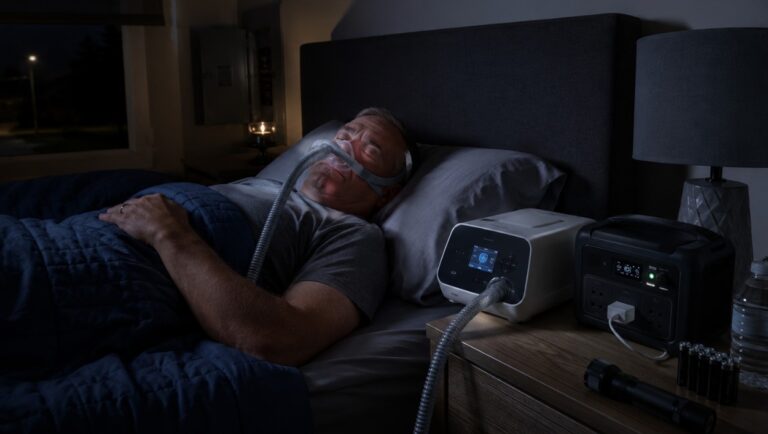
A power outage is inconvenient for most households, but it can become a health problem when sleep therapy or other medical equipment depends on electricity. In 2026, the most practical backup choices range from compact CPAP batteries to portable power stations, uninterruptible power supplies and permanently installed home systems.
The right option depends less on marketing claims than on three things: the device’s actual electrical requirements, how long it must operate and whether interruption creates an immediate medical risk. The FDA advises people who use electrically powered medical devices to plan for outages before they happen, rather than improvising once power is already down.
Which backup option works best in 2026
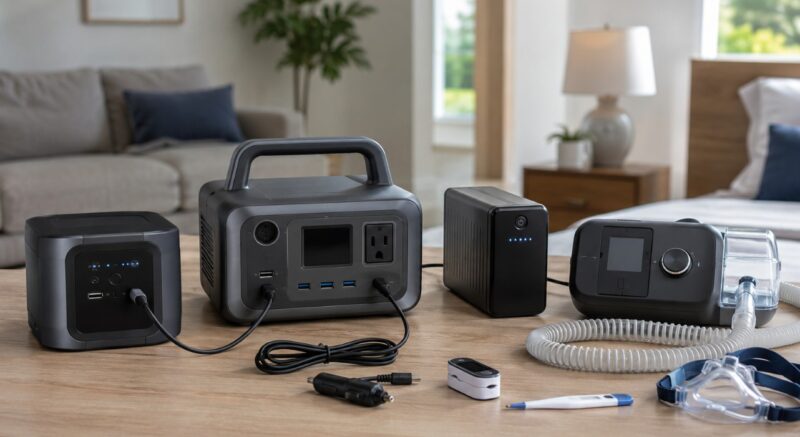
There is no single battery that suits every medical device. A dedicated CPAP battery offers portability and simple compatibility, while a larger portable power station is often more useful for overnight outages because it can support several low-power devices. A UPS can bridge short interruptions without manually reconnecting equipment, although many computer-oriented models have limited runtime. Longer outages may justify a home battery system or generator.
| Backup option | Best suited for | Main limitation |
| Dedicated CPAP battery | Travel and one-device backup | Limited capacity |
| Portable power station | CPAP and several small devices | Runtime depends heavily on load |
| UPS | Short outages and seamless switching | Often designed for minutes, not nights |
| Home battery | Longer household backup | Higher installation cost |
| Generator | Extended outages and large loads | Fuel, noise and carbon-monoxide risk |
The FDA specifically recommends preparing for power loss when home medical devices require electricity, including knowing what alternative power or care arrangements are available.
How much backup power does your equipment need?
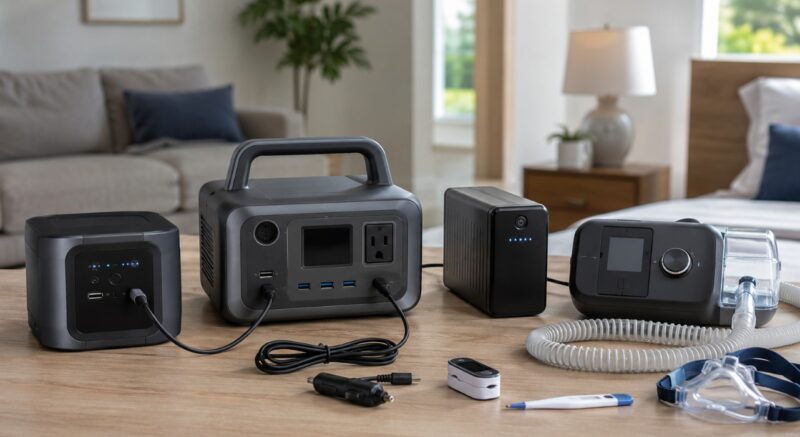
Backup power should be sized around runtime, not labels such as “CPAP battery” or “medical power station.” Check the device’s voltage, power draw and accepted input, then estimate how many hours of operation you actually need. The FDA advises users of electricity-dependent medical devices to confirm with the manufacturer or supplier whether batteries or generators can be used safely. For CPAP machines, model-specific DC converters can also avoid relying on a power station’s AC inverter.
Battery chemistry matters more when replacing a battery in equipment already designed around a specific type. Lithium-ion is common in portable power stations, while nickel-metal hydride is still used in some medical equipment. If a device specifically requires a nimh rechargeable battery, match the specified voltage, size and charging system rather than assuming rechargeable batteries are interchangeable. For CPAP therapy, the machine manufacturer’s approved power options should come first.
CPAP runtime changes when heat and humidification are used
CPAP machines are relatively manageable backup loads, but runtime varies considerably with settings and accessories. ResMed’s current AirSense 11 documentation lists a 65-watt power supply and also provides a dedicated 12/24-volt DC/DC converter for Air11 devices. Direct DC operation can avoid the extra DC-to-AC-to-DC conversion involved when a battery’s inverter powers the machine’s normal wall adapter.
Heated humidification and heated tubing deserve particular attention because producing heat requires additional energy. Turning these features down or off can conserve battery capacity during an emergency, but comfort settings should not be changed in ways that interfere with prescribed therapy without discussing the plan with your sleep-care provider.
Backup runtime is not a fixed property of a CPAP battery. Pressure settings, humidification, heated tubing, ambient temperature, battery condition and conversion efficiency can all change how many hours the same battery provides.
If you use an AirSense 11, check the manufacturer’s current DC/DC converter instructions before building a backup setup.
Oxygen and life-sustaining equipment need a stronger emergency plan
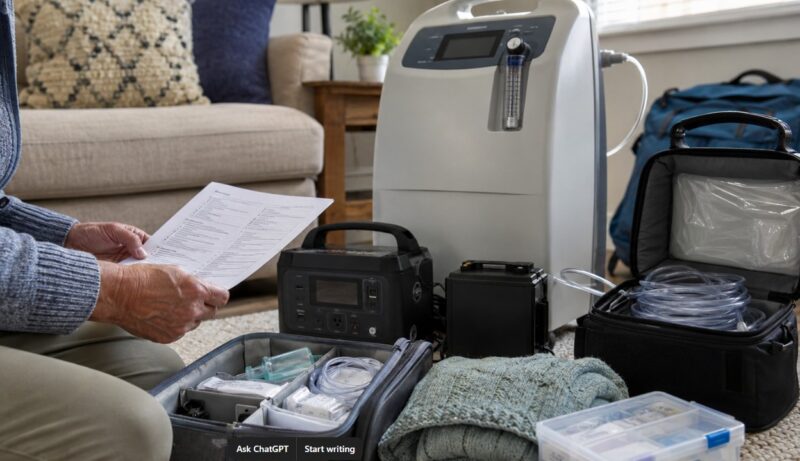
Portable batteries are useful, but equipment such as oxygen concentrators, home ventilators and other electricity-dependent devices should not rely on a single consumer power station as the entire emergency strategy. The HHS emPOWER program exists because prolonged outages can become dangerous for people who depend on electricity-powered durable medical equipment. Ask the equipment supplier or clinical team how long the device can safely operate on internal batteries, what backup equipment is available and when evacuation becomes necessary.
- Keep manufacturer and equipment-supplier numbers available offline.
- Charge internal and external batteries before forecast emergencies.
- Identify a powered location you can reach if an outage becomes prolonged.
- Include medical equipment requirements in any transport arrangements made in advance.
If a generator is part of the plan, the CDC says it must be outdoors more than 20 feet from windows, doors and vents, with a working carbon-monoxide detector in the home.
Frequently asked questions
1. Can a CPAP battery go on an airplane?
Often, but battery size matters. Under FAA rules updated in April 2026, rechargeable lithium batteries up to 100 Wh are generally allowed on passenger aircraft. Batteries from 101 to 160 Wh require airline approval, and batteries above 160 Wh are generally prohibited. Spare lithium batteries and power banks belong in carry-on baggage, not checked luggage.
2. Should backup batteries stay plugged in all year?
Only if the manufacturer supports continuous charging or pass-through use. Battery-management systems differ, so follow the storage and charging instructions for the specific unit rather than assuming permanent charging is harmless.
3. Can solar panels keep a CPAP running indefinitely?
Not reliably. Solar generation varies with weather, season, panel position and daylight. Treat solar as a way to replenish stored energy, not as the only emergency source needed for prescribed therapy.
4. What should CPAP users prepare besides power?
Keep the mask, tubing, filters, prescribed settings and cleaning supplies accessible. Travelers who use humidification should also plan for appropriate water and can review practical considerations for a travel CPAP setup before leaving home.
Build the backup plan around the medical risk
For most CPAP users, a compatible dedicated battery or properly sized portable power station can provide a practical layer of protection against routine outages.
The important step is testing the complete setup before an emergency, including cables, adapters and the settings you actually use overnight.
People relying on oxygen, ventilation or other medically essential electrical equipment need a broader plan developed with their clinician and equipment supplier, including alternative equipment and a safe place to relocate if power cannot be restored.
Backup power should extend continuity of care; it should never create false confidence that a limited battery can replace a medically appropriate emergency plan.