
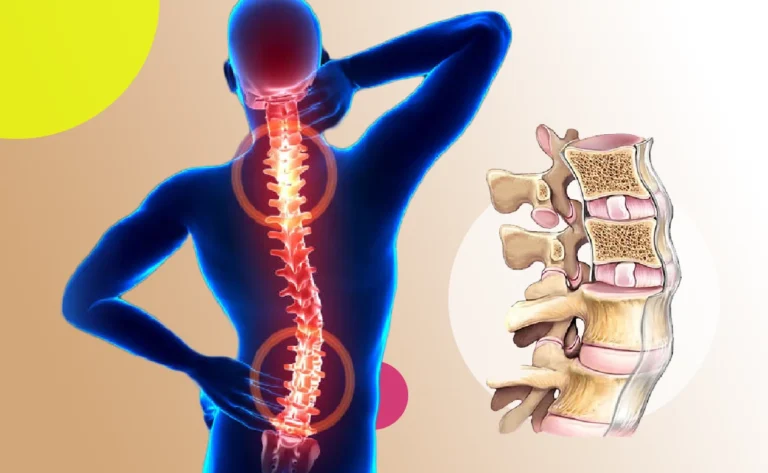
Living with excessive upper body weight feels a lot like running an infrastructure server under constant, unbalanced load. When disproportionate tissue mass shifts your centre of gravity forward, your spinal muscles work every single minute overtime, leading to persistent neck stiffness, shoulder strap grooving, and chronic back fatigue.
Achieving lasting physical relief requires reducing dense tissue mass rather than just masking musculoskeletal symptoms with physical therapy. If you are researching surgical options for a breast reduction surgery singapore procedure, understanding how plastic surgeons preserve blood supply while removing excess glandular tissue gives you a clear baseline for recovery planning. Setting up a realistic care roadmap early protects your posture while restoring daily physical comfort.
The Biomechanics of Chronic Postural Overload

Your spinal column is designed to support balanced vertical weight distribution across your cervical, thoracic, and lumbar vertebrae. When heavy anterior tissue mass shifts your centre of gravity forward, your erector spinae muscles remain continuously contracted to prevent your torso from slumping.
Over several years, this chronic muscular contraction creates deep structural tension along your trapezius and rhomboid muscle groups. The constant downward pull from bra straps also compresses the brachial plexus nerves, causing numbness and tingling in your fingers that physical therapy alone cannot resolve.
The Pure Liposuction Removal Mistake
A very common and expensive mistake patients make is attempting to reduce heavy chest volume using suction-assisted liposuction alone. People fall into this trap because they are drawn to promises of zero surgical incisions and rapid weekend recovery.
In reality, adult chest tissue consists of dense glandular structures interspersed with fibrous connective bands, neither of which can be aspirated through narrow liposuction cannulas. Using pure liposuction only removes soft fat deposits, leaving dense glandular tissue behind and causing severe skin sagging because the overstretched skin envelope is never tightened. Patients end up paying twice when they require formal open surgical resection eighteen months later.
Nipple Sensation versus Volume Reduction
Standard aesthetic guides often promise that surgical reshaping delivers drastic volume reduction while keeping nerve sensitivity entirely untouched. The non-obvious trade-off is that removing substantial tissue volume requires preserving a neurovascular pedicle that maintains vital blood flow and nerve conduction to the nipple complex.
Choosing a dramatic volume reduction of over six hundred grams per side trades a small percentage of transient nipple sensation for immediate, permanent spinal pressure relief. The preserved neurovascular pedicle keeps tissue viable, and while surface sensation may take up to twelve months to settle, your chronic spinal pain vanishes the moment you wake up in recovery.
Calculating Real Five Year Physical Relief Economics
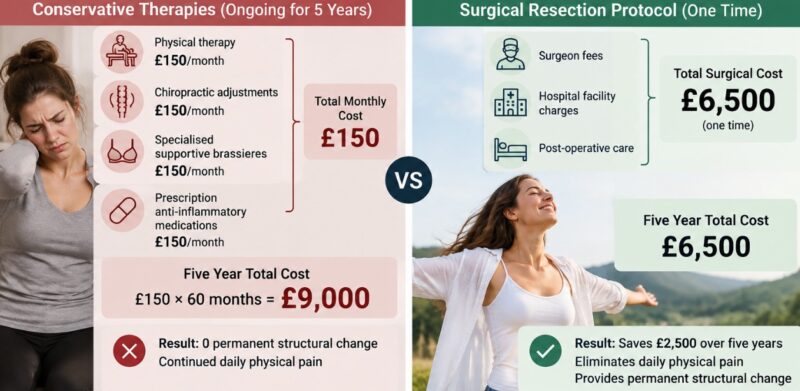
Let us examine a concrete worked example comparing ongoing conservative therapies against a single surgical reduction protocol over a five-year period. Consider an individual spending 150 pounds monthly on physical therapy, chiropractic adjustments, specialised supportive brassieres, and prescription anti-inflammatory medications.
Over five years, managing chronic spinal pain through conservative measures accumulates 9,000 pounds in recurring out-of-pocket expenses while yielding zero permanent structural change. In contrast, a comprehensive surgical resection procedure costs 6,500 pounds upfront, including surgeon fees, hospital facility charges, and post-operative care. Sourcing a permanent surgical protocol saves 2,500 pounds over five years while eliminating daily physical pain.
Essential Operational Habits for Smooth Recovery
Maximising your surgical recovery while ensuring crisp wound healing requires establishing simple, repeatable habits during early convalescence. Treating your recovery like a structured operational protocol keeps tissue swelling low and protects internal suture lines.
Keep these core operational habits in mind:
- Wear front-closing surgical bras continuously: Keep non-wired compression garments snug for six weeks to minimise tissue fluid and support healing seams.
- Maintain elevated back positioning during sleep: Sleep at a thirty-degree incline for three weeks to encourage venous drainage and prevent upper chest swelling.
- Limit shoulder girdle rotation: Avoid lifting objects heavier than three kilograms or reaching overhead for twenty-one days post-op.
A Clear Decision Rule for Surgical Timing

You do not need a clinical background to determine whether your body requires surgical tissue reduction or simple postural training. You can apply a straightforward decision rule called the three-symptom structural test during your initial evaluation.
If you experience deep shoulder strap grooves deeper than five millimetres, recurring intertrigo skin rash under the lower breast fold, and chronic upper back pain that persists despite six months of targeted core exercises, surgical tissue removal is medically indicated. Removing four hundred to eight hundred grams of tissue per side corrects your biomechanical alignment and restores long-term spinal health.
Restoring your physical balance is ultimately about choosing a sustainable structural solution that respects your body’s biomechanics. By avoiding the mistake of relying on pure liposuction for dense glandular tissue, understanding the trade-off between volume reduction and nerve recovery, and applying clear decision rules, you protect both your physical well-being and your finances. Approach your personal care decisions with calm strategy, rely on solid medical facts, and move forward with quiet confidence in your health path.